Raw vs. Effective Lumens: What Actually Lights the Trail
More lumens doesn't always mean more visibility.
Out on the trail, your lighting doesn’t just help you see, it shapes the decisions you make when the terrain gets tough. A turn you commit to. A line you hold. How far you’re willing to keep going.
That’s where the difference between raw lumens and effective lumens matters. Because on the trail, light changes, heat builds, and conditions shift. What started as bright light can fade without you even noticing until you need it the most.
It’s something we’ve seen first-hand, and why our SYLVANIA PHENOM™ lights are engineered to deliver best-in-class lumen efficiency through superior thermal engineering.

Raw Lumens: Where it Starts
A lumen is simply a measurement of light output. Most off road lights are marketed using raw lumens – the maximum amount of light an LED can produce under perfect conditions.
Raw lumens ratings are typically measured:
- At the LED chip level
- Right at startup, before heat builds up
- Without accounting for real-world optics or housing losses
That raw lumen number tells you what a light is capable of at its peak. But here on the trail, there’s too many conditions to account for, and you almost never operate at that peak for long. Within minutes the housing starts warming up, internal temperatures start to rise, and the output begins to taper.
Two major factors determine how much of a light’s output reaches the trail:
- Heat: LED’s generate heat at the junction – the tiny point inside the chip where light is actually produced. As current flows through it, some energy escapes as heat instead of light, and as that heat builds up, the chip becomes less efficient and produces less light output - a phenomenon called thermal rolloff. The better a light can manage heat, the more consistent its performance stays all night on the trail.
- Optics: Not every lumen produced by an LED ends up where it’s useful. Reflectors and lenses determine how efficiently light is captured, shaped, and directed onto the terrain ahead. Better optics put more light on the trail where you need it.
Efficiency that Matters in the Field
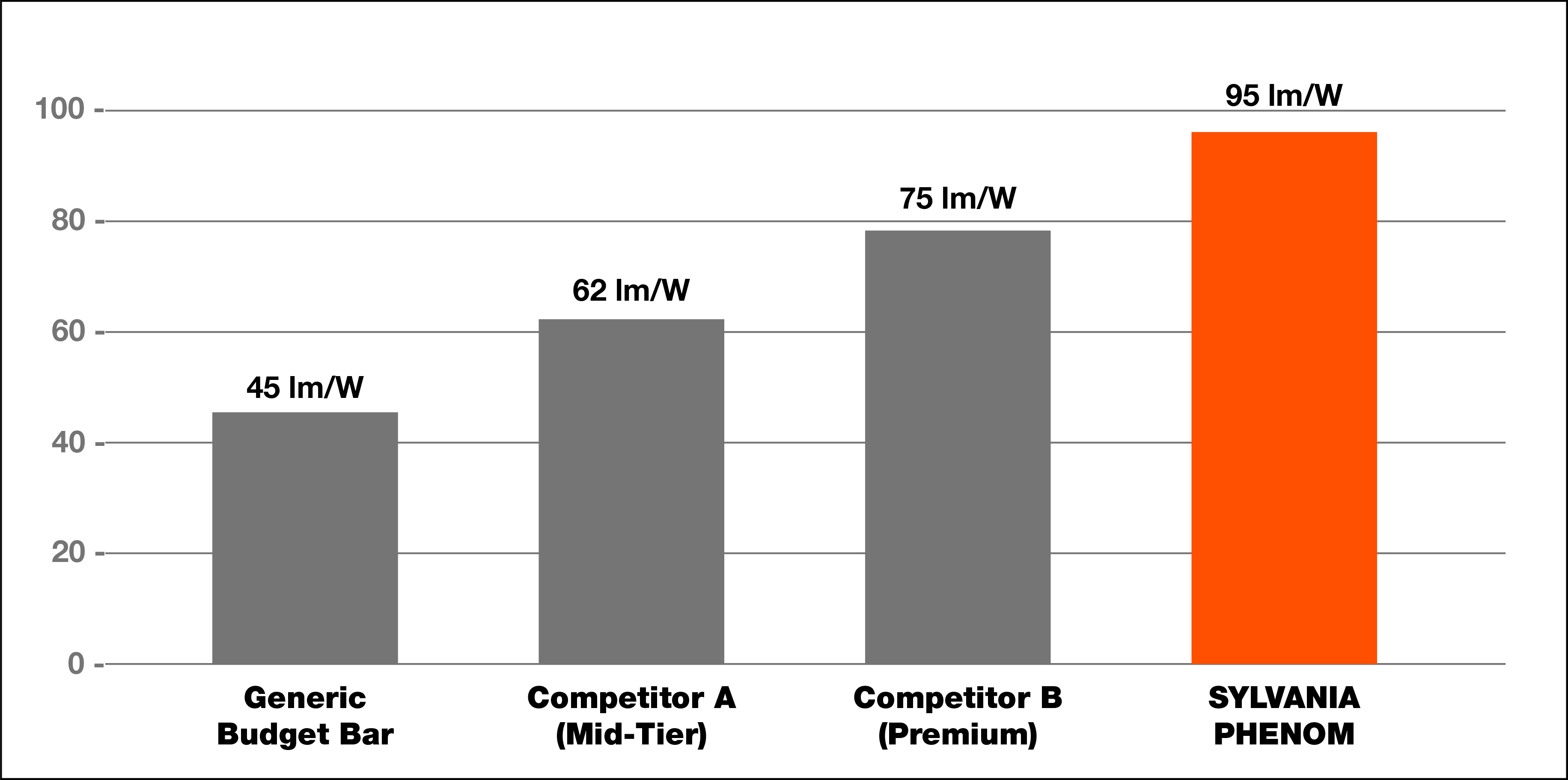
Effective lumens are what’s left after heat, and the optic design take their cut – the light that actually reaches the trail, not just the number printed on the box. One way to gauge that loss is lumens per watt (lm/w), a measure of how efficiently a light converts electrical power into usable light. A higher lm/w rating generally means more of that power becomes light in front of you, rather than heat dissipating behind the lens.
Higher efficiency means:
- Less heat: Helps maintain performance and reduce thermal rolloff over time.
- Less power draw: Reduces demand on your vehicle's electrical system during extended use.
- More usable light: More of the energy you're paying for is lighting the trail, not heating the housing.
At the end of the day, efficient lights waste less energy and deliver more of their output where it matters most: the terrain ahead.
Look Beyond the Lumen Number
Lumens are only part of the story. Understanding the difference between raw and effective lumens helps you see what really matters: how much usable light makes it out of the light and onto the trail.
Frequently Asked Questions
Raw lumens overstate real-world output by roughly 20-40%. Both numbers matter, but effective lumens are what's actually cutting through the dust when you're pushing hard.
Remember that a lower temperature = less thermal rolloff and more sustained output. Look for LED lights that run cool, the best pods stay under 85°C, some as low as 70°C.
More light per watt means less heat and strain on your electrical system. Look for lights that deliver 80+ lm/W - SYLVANIA PHENOM builds ours to target 95 lm/W.
Optics determine how efficiently a light captures and directs the output from its LEDs. Higher-quality parabolic reflectors can capture up to 85% of available light, while cheaper designs may only capture 65-70%. Look for precision-engineered parabolic reflectors or multi-facet TIR optics designed to maximize efficiency and beam performance.