White, Yellow, or Amber: Choosing the Right Light for the Trail Ahead
Out on the trail, conditions flip fast. One mile it’s clear, the next you’re punching through a wall of dust or fog, and suddenly light color isn’t a preference, it’s the support you need to keep moving forward—all while saying, “let’s do that again!”.
With SYLVANIA PHENOM™ lights, you’re not locked into one setup. You have the flexibility to choose white, yellow, or amber – each built for a specific kind of visibility/purpose, depending on what the trail throws your way.
Why Light Color Matters More than you Think
Light isn’t just brightness – its behavior. As soon as particles enter the air – dust, moisture, snow – light interacts with them. Some wavelengths scatter more, some push through.
- Shorter wavelengths (white light) scatter more easily
- Longer wavelengths (yellow and amber) penetrate further through haze.
The Visible Light Spectrum

That interaction determines whether you see the trail clearly or see a wall of reflected light in front of you. The right color doesn’t just light the trail – it helps you see through it.
White Light - Maximum Output for Clear Trails
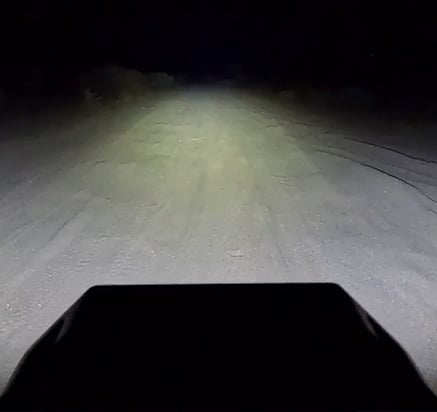
Best for: Clear nights, open terrain, long-distance visibility
- Higher color temperature (~5300K – 6500K)
- Highest raw lumen output
- Longest throw when there are no particles in the air
White is your everyday go-to when visibility is clear and clean. Every bit of light travels where you want it – down to the trail.
But when conditions change, those shorter wavelengths begin to scatter, reflecting back toward you and reducing clarity.
Yellow Light - Ready for Changing Conditions
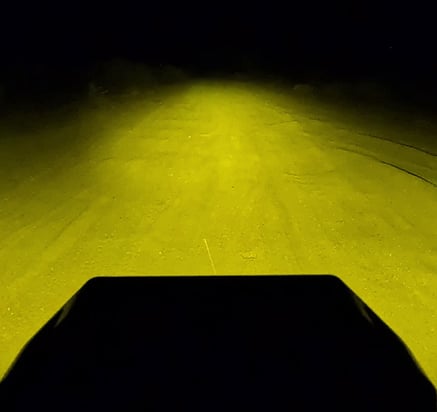
Best For: Light rain, thin fog, and dust
- Lower color temperature (~3000K)
- Reduces backscatter in mild conditions without a big output loss
Yellow light filters out much of the blue part of the white light, while keeping most of the brightness. By removing blue light, it reduces the glare caused by fine particles you’ll often run into on the trail – light rain or dust – without a big drop in your light output.
For tougher conditions, we recommend using an Amber light.
Amber Light - Help cut through the worst trail conditions
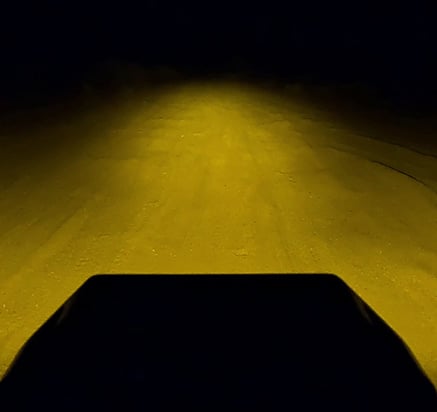
Best for: heavy fog, rain and snow, dust and sand
- Lower color temperature (2000 - 2500K)
- Longest practical visible wavelength resistant to scatter in dense particle conditions.
Amber light uses longer wavelengths, which are most resistant to scattering. Instead of lighting up the particles of rain, dust, or snow in front of you, amber light cuts through them to improve visibility on the trail instead of creating a glowing cloud in front of your vehicle.
Ready For Whatever The Trail Throws At You
On more serious off-road setups, you’ll often see white lights with yellow or amber lights on a separate switch. That way, when the environment changes you can adapt instantly and keep moving.
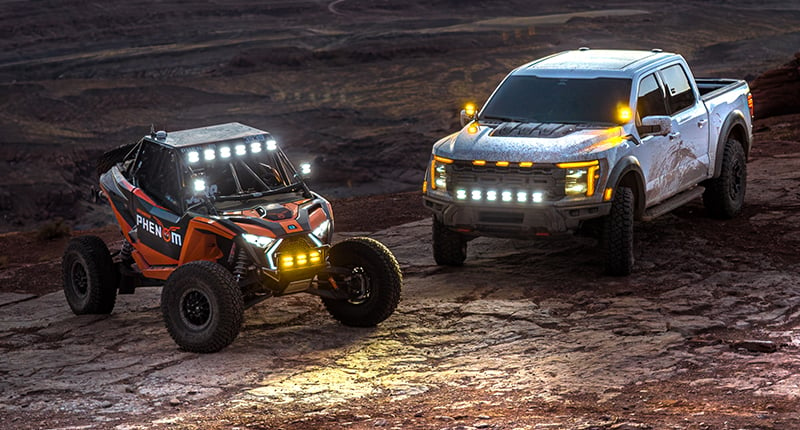
This decision can start at install – SYLVANIA PHENOM pods can be mixed and matched so you can coinfigure your rig for all conditions from the start. And if you’re needs change over time, the SYLVANIA PHENOM LNK series can adapt quickly by swapping out the lens.
At the end of the day there’s no single ‘best’ light color – its all about having the right setup for your environment, and the flexibility to adapt when conditions change.
Frequently Asked Questions
Color is about performance, not just looks, and it's measured in Kelvin (K). White (5300K) emits shorter wavelengths for maximum clarity and distance on a clear night, but those wavelengths scatter off dust, fog, and rain and can glare back at you. Yellow (3400K) and True Amber (2200K) emit longer wavelengths that cut through airborne particles with far less glare.
Rule of thumb:
- Clear night - White
- Light dust, mist, or rain - Yellow
- Heavy fog, snow, or sand - Amber
Lens color, measured in Kelvin (K), isn't just about looks—it's about helping to see your surroundings when conditions change. Clear/White lenses (5300K) emits shorter wavelengths for excellent clarity and distance on a clear night, but those wavelengths scatter off dust, fog, and rain and can glare back at you. Yellow lenses (3400K) and True Amber (2200K) emit longer wavelengths that cut through airborne particles such as dust, rain and snow, with far less glare.